Schwarze Pumpe: Structural change in the soil too
Half-time for soil remediation at the former gas combine
Spremberg. It was the largest energy combine in the former GDR. Until the
1990s there were briquette factories,
power and steam generation, coking plant and town gas production were located on the Schwarze Pumpe site. Up to
125,000 tonnes of raw lignite were delivered daily from the
from the surrounding opencast mines, processed
and around 85 per cent of all the GDR's town gas was
GDR was produced here. Industrial history and legacies that are also reflected in the soil.
Since 2017, the consortium Bauer
Resources GmbH and Lobbe, on behalf of the Lausitzer
and Mitteldeutsche Bergbau-Verwaltungsgesellschaft mbH, has been working on soil remediation. Lobbe operates a vacuum
operates a vacuum-thermal cleaning plant on the site. It is unique and the first Lobbe soil remediation plant of this dimension.
are proud that the conception of the plant, as we have
we developed it delivers extraordinarily good results," says Corina Fiskal, Lobbe Industrieservice GmbH & Co KG.
Lobbe designed the vacuum-thermal cleaning system.
Structural change becomes clear
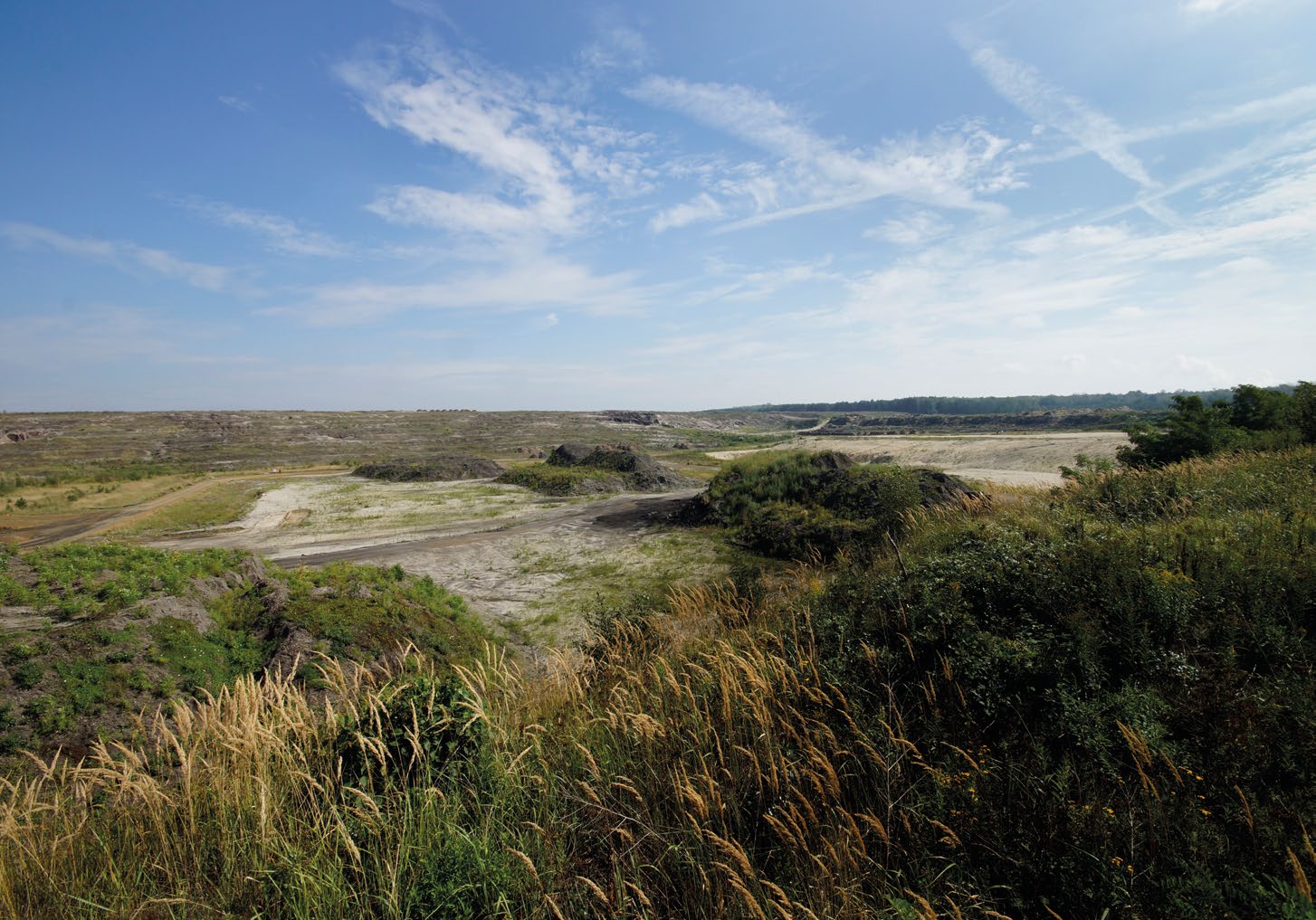
Today, numerous industrial companies are located here, reflecting the structural change in Lusatia. Soil remediation in the form of source strength reduction by means of soil exchange (QMBA) is halfway completed. The polluted soils contain phenols, polycyclic aromatic hydrocarbons (PAHs) and volatile (PAH) and volatile aromatic hydrocarbons (BTEX). (BTEX).
A total of approx. 280,000 tonnes of
of these soils have to be extracted from a depth of up to 14
metres and treated. Lobbe
is the builder and operator of the vacuum-thermal
plant on behalf of the Lausitzer und Mitteldeutsche
Mining Management Company Ltd (LMBV). The
LMBV awarded the contract for the remediation of the contaminated
May 2017 to the consortium Lobbe/Bauer.
Lobbe/Bauer. Lobbe designed a concept based on the experience
from other large-scale projects and the specifications
LMBV, designed a vacuum thermal plant that is unique in Germany.
plant. The process engineering concept
Lobbe had already tested the process concept at other sites.
Two-stage heating
163,000 tonnes from the advance excavation and from 75 single sheet pile boxes (approx. 10 x 11 m), have so far been delivered by lorry from the excavation areas to the interim storage area. There, the contaminated soils are successively removed by wheel loader of the contaminated soils via the loading hopper for treatment in the vacuum-thermal cleaning plant (VTRA). (VTRA). The VTRA has two dryers with filters and a vacuum system. "Under vacuum of up to 20 millibars absolute, the contaminated soil is the contaminated soil is heated in batches to 250 to 280 to 280 degrees Celsius up to the boiling point of the pollutant to be treated," explains Corina Fiskal. The hot water vapour with pollutants produced in the first with the pollutants is cooled down and can be and can be discharged into the waste water analytical checks, it can be discharged into the wastewater treatment plant. The pollutants evaporating in the second stage are also condensed, collected in containers and finally collected in containers and finally disposed of properly as hazardous waste.
Lobbe is the operator of this plant, and many years of
years of know-how was bundled for this technology.
In autumn 2018, the VTRA went into trial operation,
Since then, the remediation of the contaminated soils has been underway.
The quality of the soil treated by VTRA meets high criteria and the
the quality of the soils treated by the VTRA meets high criteria and the
soil may then be filled back into the excavation pits.
excavation pits. The installation above the post-mining groundwater level
groundwater level ensures that
water protection in the region is taken into account.
is taken into account. The entire project will run until the end of
of the year 2022.
The contaminated soil is heated to 250 to 280 degrees Celsius by means of negative pressure.
Facebook
Twitter
LinkedIn
XING